Role: Design System Lead Timeline: 2021 – Present

From a fragmented landscape of isolated designs loosely tied to a corporate visual identity, to a fully integrated digital ecosystem. Today, we are well on our way to covering the complete end-to-end chain—encompassing core foundations, UI patterns, component libraries, production-ready code, and automated CI pipelines.
Context & The Challenge

  • The starting point: Ascom lacked a unified design system. Design and implementation were fragmented, relying loosely on an older corporate visual identity (CVI).

  • The goal: Create a single source of truth to bridge the gap between design and engineering, scale our processes, and ensure consistency across the entire product portfolio.

Phase 1: Establishing the Foundation

  • Tooling Migration: Championed the transition from Adobe XD to Figma to enable true collaboration.

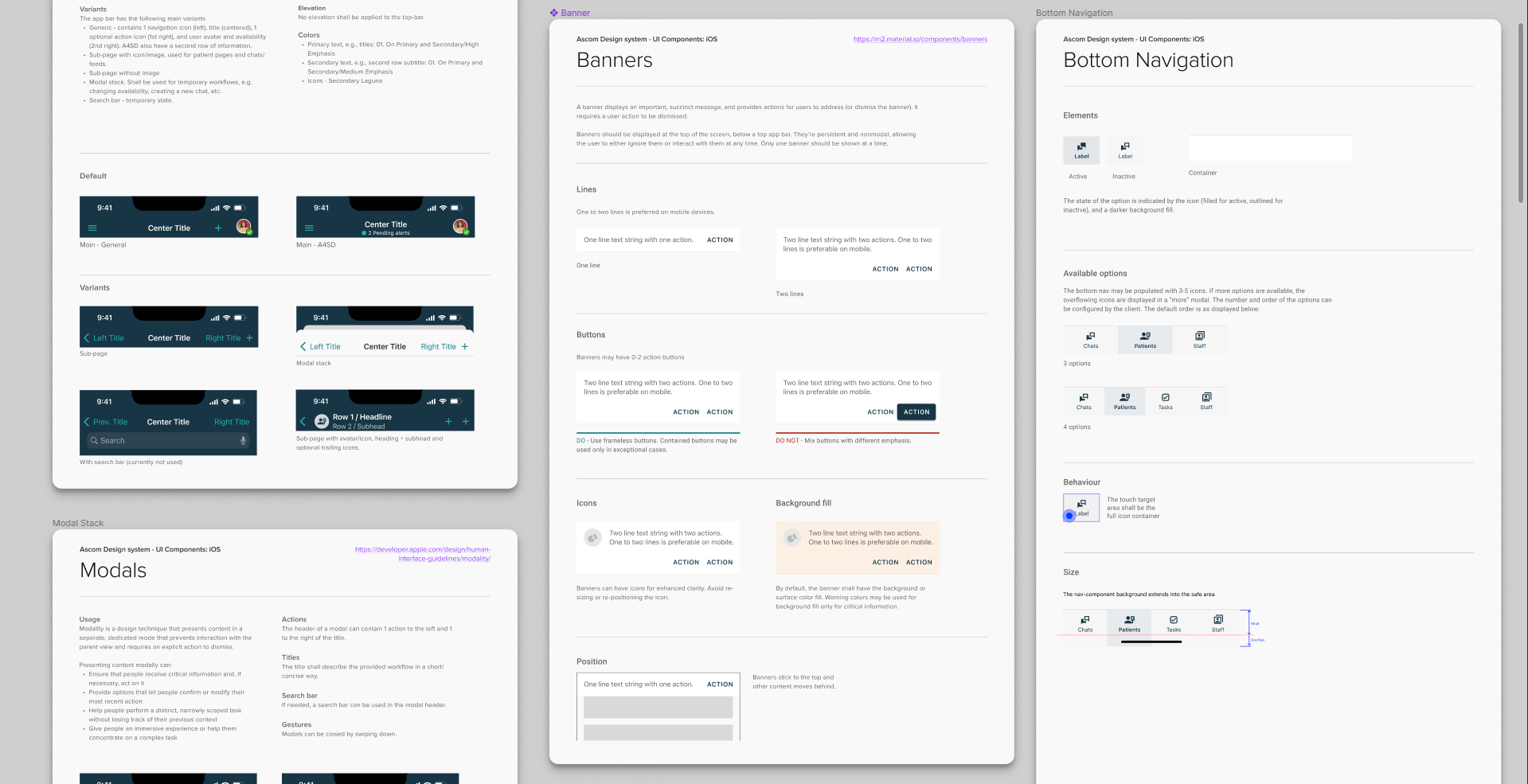
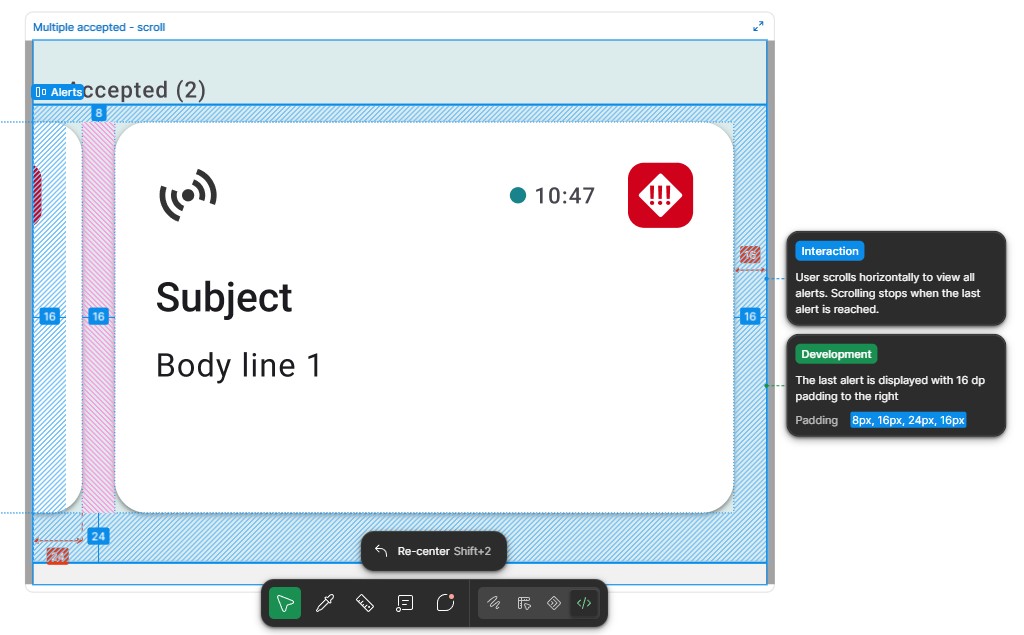
  • The First Library: Built our first comprehensive component and style library based on Material Design 2 (M2).

  • Streamlining Handoff: Standardized the design process, significantly improving the speed and quality of design handovers to development.

Phase 2: Changing the Culture & Ways of Working

  • Bridging the Gap: Having a library was only step one; getting teams to use it was the real challenge.

  • Developer Onboarding: Actively trained developers on how to use Figma’s Dev Mode and how to consume reusable styles rather than hardcoding values.

  • Process Alignment: Iterated on workflows until designers and developers shared the same language.

Phase 3: The M3 Evolution & Brand Adaptation (2025–2026)

  • Modernization: Initiated a strategic migration to Material Design 3 to future-proof our products.

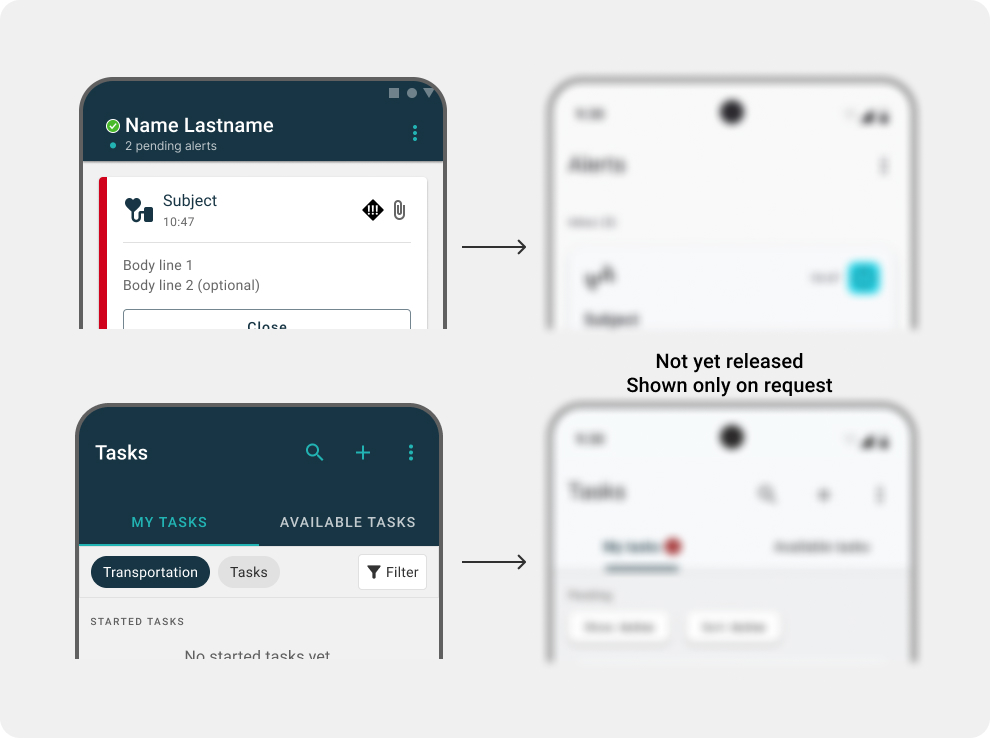
  • Brand Personality: Defined the digital product brand personality and translated it into new, distinct visual styles.

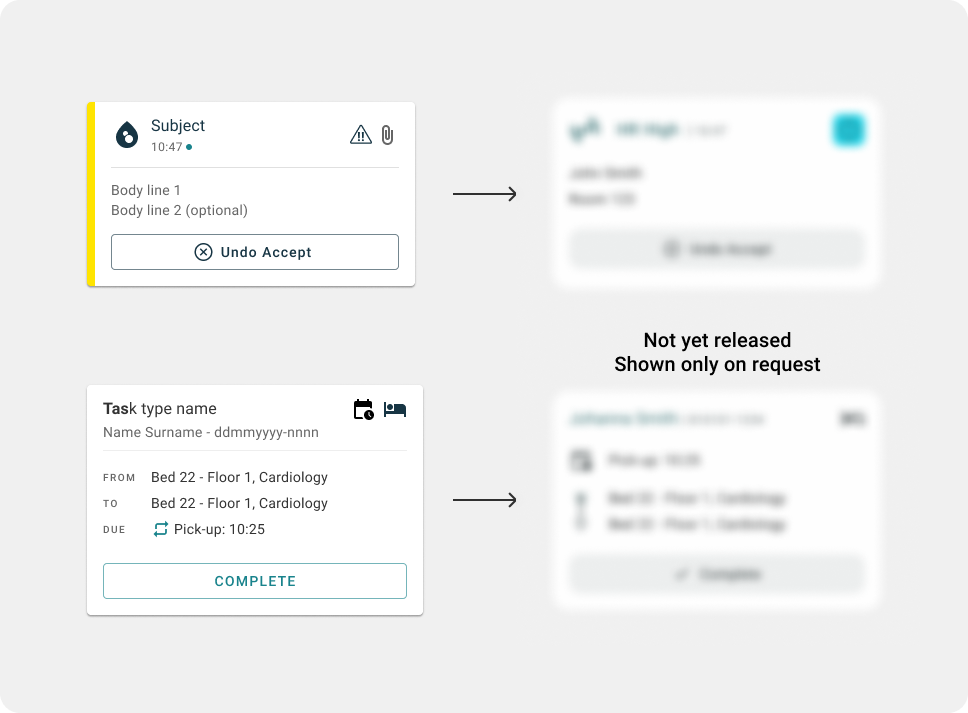
  • Custom Patterns: Created unique UI patterns and components specifically tailored to Ascom’s user needs.

  • Portfolio Redesign: Applied the new visual language to do an overarching re-design across our product portfolios.

Phase 4: Engineering, PoCs & Architecture

  • Driving Acceptance: The biggest hurdle was achieving buy-in from engineering. I mitigated this by focusing on rapid, tangible results.

  • Cross-Functional Team: Put together a dedicated team of developers to build fast Proof of Concepts (PoCs).

  • Design Tokens: Successfully implemented tokens across Android, iOS, and Web.

  • Web Strategy: Developed the architecture and strategy for using framework-agnostic Web Components to ensure maximum scalability.

Current State & Next Steps

  • The Lead Role: Today, I lead the Pulse Design System, overseeing both strategy and execution.

  • Scaling Up: My current focus is on refining the system architecture, optimizing CI/CD toolchains/pipelines, and driving change management across the organization to ensure high adoption.